A Continuing Need Inspires a Focus on the Future

Whether you have been a member of The Phoenix Society for years and are renewing your membership, or you are just discovering this wonderful organization, THANK YOU for your support. Your membership gift provides valuable resources to the burn community and gives the tools needed to overcome challenges a burn injury presents.

The following article by Amy Acton, Executive Director, is an excerpt from our Burn Support New, Issue I, 2013, and chronicles the tools one burn survivor used, and how she was empowered to overcome adversity.

As we celebrate our 35th year of service, I ask that you please take just a moment and reflect on your connection to the Phoenix Society and what it has meant in your life. Whether you are a survivor, family member, a donor, or one of our many partners, it is important for us all to stop and celebrate our success together.

With as far as we’ve come in the past 35 years, some might question why we don’t just revel in the accomplishments we’ve made and focus on maintaining what we’ve put into place. But the reality is that as far as we have come in the programming and support for long-term burn recovery, there is still much to do. Isolation, social challenges, and discrimination are just a few of the realities still faced by many families whose lives have been affected by a burn injury.

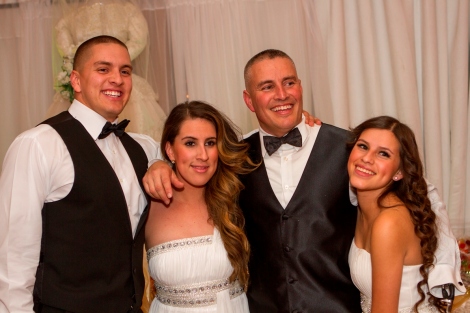
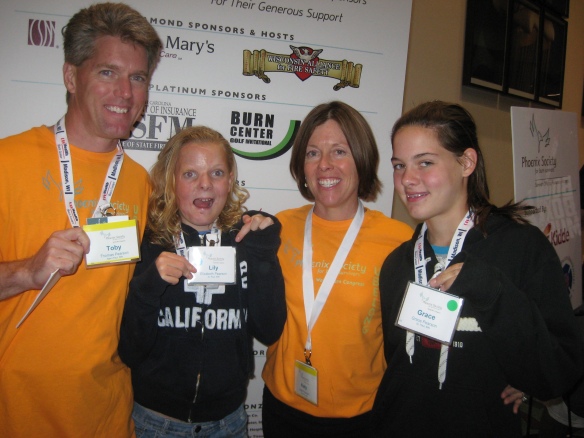
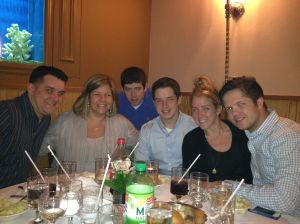
Lili (far right) with fellow World Burn Congress 2006 Attendees

Lili (far right) with fellow World Burn Congress 2006 Attendees

Lili, a burn survivor and long-time Phoenix Society member, sent us the following email after she had received a cruel letter regarding her appearance.

“I remember so clearly the first time that I attended WBC, I was a painfully shy and insecure young woman. So much was new and scary; facing people, talking to anybody, making eye contact, leaving the security of my house, but most of all, the most scariest and gargantuan challenge was living in a body I had not in my worst nightmares imagined that I would occupy.

I went to WBC at the invitation of my hero and mentor Barbara Kammerer-Quayle. During WBC I was elated, I felt happy, inspired and during those few days I felt comfortable with myself. All was good with me and the world at WBC. It was heart breaking to have to go back home, but I was immensely empowered that first time. I went back to WBC time and time again with the same positive effects as my first time there. WBC gave me the courage and determination to follow my dreams, come out of my shell and live my life as if nothing had even happened.

First I went back to school, then I got married and then I realized what I had always wanted since I was a wee little girl, to have a family. Everything I wanted to create in my life I did it, but not alone. The Phoenix Society’s WBC has been utterly one of the most important life lines I was given after surviving the fire, Barbara Quayle is one of the other and my children and my family and all of the wonderful people I have come across every time I have participated in the World Burn Congress.

Tonight after receiving a letter, I thought about the burn survivors I had met at WBC, the workshops, the peer support and I thought to myself if I had not had the support of the burn survivor community as a whole, I would have unraveled at the sight of the words in this letter. For a moment my knees buckled, my heart ached and felt the old need to retract from an ugly world, but in the same instant I came back to my senses and remembered that in the face of my reality, being a double amputee burn survivor, I have achieved much and overcome much and I credit you all with this inner strength. I thank you all from the bottom of my heart for being there and providing the tools necessary for someone like me to withstand the harsh words that some people in their ignorance might say to me.”

As I read her email, initially I was frustrated and angry that Lili had been subjected to such rude and thoughtless insults about her appearance. As I re-read it a second time, I focused on her main message—that the Phoenix Society had helped to equip her with the tools she needed to live her life with greater confidence and a sense of community. She shared that without the peer support and knowledge gained through the Phoenix Society she would have “unraveled.” Instead she was buoyed by the inner strength and knowledge that she had the tools she needed to deal with the situation and a community of support behind her. This is the impact of our work together.

Lili has participated in our community for many years, has gone on to live a fulfilling life since her injury, and has raised three wonderful daughters. Her growth and courage has always impressed me and although she gives a great deal of credit to the Phoenix Society and our “community,” I know that she has worked very hard personally to grow from her experience. However, Lili’s message did remind me just how important our work is, and it shifted my focus forward to consider the many opportunities that lie ahead for us to make an even greater impact.

The belief of the Phoenix Society is that if we can provide life skills and a community of peer support to burn survivors and their families, they can return to the communities in which they live with confidence and never feel alone.

Lili’s story should energize all of us to remain focused on the future health of the Phoenix Society for Burn Survivors and ensure that more families have access to this community and the growing resources offered here. Each of us has a role to play in this community.

How can you help? By getting involved and helping us to sustain the current programs through volunteering, contributing financially to the organization if you can, and sharing within your community the good work that happens here.

Our collective efforts have made a difference. Just as Lili shared, we are providing the tools necessary to live life.

Our work is too important to stop now.

By: Amy Acton, RN, BSN, Executive Director

A Survivor Story – Helping Our Youngest Survivors Have a Positive Return to School

with teen girl

Lisa Donovan (Left) with UBelong participant

Lisa Donovan, burned in a car accident at 18 months old, grew up in a small town that wasn’t familiar with burn injuries or the challenges they present, especially as she prepared to start school. 

Most children could pass the mandated motor skill tests required for 1st grade admission, but for Lisa they felt like defeat. Her burn injuries left her with damage to her vision and scaring on her hands that made the required skills of balancing on a beam and touching her pinky to her thumb impossible.

The motor skill tests were only the beginning of the many challenges the Donovan’s would face. Because of the lack of education and the community’s unfamiliarity with burn injuries, Lisa and her family found themselves struggling with comments like, “it isn’t Halloween, take off your mask!” or a phone call from the school principal asking Lisa to stay home for a few days because her scars were frightening a new student.

While these were not everyday occurrences, they did shape Lisa’s school experience, and the recollection of the hurt they caused is poignant, even today.  As a result, Lisa became a Child Life Specialist and is ecstatic to be a part of the development of the Phoenix Society’s Journey Back school re-entry resource.

She reflects on her own experience and understands all too well the relief she and her family would have had if the school and other students were educated about burn injuries, encouraged to display empathy, and given the tools to ask questions in a positive way.  So much pain could have been avoided if Lisa would have had access to the coping techniques and social skills offered within the Journey back resource.

Lisa now works hard to ensure all families have the tools and support needed as they return to school after a burn injury.  Eleven years ago, she began working with Shriners’ Hospitals for Children as a Child Life Specialist – a familiar place for her, as she is a former patient. In 2003, while searching for information to send home with a family about to be discharged, she discovered the resources offered by the Phoenix Society for Burn Survivors. 

She quickly attended Phoenix Society’s World Burn Congress and later introduced the Phoenix Society’s SOAR (Survivors Offering Assistance in Recovery) peer support program to her hospital in Boston. Today, Lisa continues to be an important part of the Phoenix Society family and the expanding programs we offer. She has assisted with the development of the Journey Back resource and materials, has shared her story in video productions, and currently volunteers as a facilitator with the UBelong youth and family program.

“Seeing families receive the help they need  and the knowledge that they are not alone after they leave the hospital, is extremely rewarding,” says Lisa.  “The fact that this entire program will be easily accessible online, with  videos, worksheets, and educational manuals for teachers, parents, and all professionals to help a child, is very exciting.  Even those that don’t have a local burn center can get the resources and support they need without leaving the safety of their home.  This is a resource that would have helped me through every stage of my school years.” 

No child should struggle alone with school re-entry, as Lisa did. Your support of the Phoenix Society and resources like the Journey Back school re-entry program are changing the lives of so many. Your 2013 Spring Membership Gift will empower so many like Lisa by providing the tools and support need to thrive again!  

donate_nowTo learn more about the Journey Back program click here and check back this summer to download the entire program.

How to Talk About It: “Crucial Conversations” with Burn Survivors

This week, the Phoenix Society is attending the American Burn Association (ABA) Annual Meeting, held in Palm Springs, California.  As part of the Aftercare and Reintegration Committee (ARC), we will be participating in a 2-hour forum for burn care professionals entitled “How to Talk About It:  Crucial Conversations with Burn Survivors.”  The attached article is an excerpt from our Burn Support News, Issue I, 2013 and discusses the upcoming forum at ABA.

iStock_000003814138_SmallNearing the end of his shift, a nurse enters his patient’s room for a quick, routine check of his patient’s vital signs. During a casual conversation, his patient, who has experienced third-degree burns over his legs and torso, tells the nurse he is very worried about his future relationships and discloses his fear that he will be unattractive to others. A routine interaction has become a potential “crucial conversation” important in the burn survivor’s course of recovery.

At the American Burn Association (ABA) Annual Meeting this spring, the Aftercare and Reintegration Committee (ARC) will host a 2-hour forum for burn professionals entitled “How to Talk About It: Crucial Conversations With Burn Survivors.” The focus of the forum, which will be held on April 26, is on preparing healthcare professionals to effectively discuss this and other sensitive topics to support burn survivors and their families on their post-burn recovery. Participants will learn to identify topics that can transform into “crucial conversations” important to a burn survivor’s psychosocial adjustment and quality of life after a burn injury.

Forum presenters will share communication skills and strategies that can help professionals engage in and contribute to meaningful discussions with their patients. Barriers to engaging in such discussions will also be shared, as well as best-practice guidelines for healthcare professionals when responding to sensitive questions or initiating difficult conversations. Presenters will include both burn survivors and healthcare professionals, who will share their experiences and recommendations from their own perspectives. Specific strategies and patient centered communication skills for successful crucial conversations will be described and demonstrated.

As part of its ongoing commitment to developing awareness of the needs of burn survivors and their families, ARC offers educational forums each year at the ABA Annual Meeting. In the past, these forums have addressed topics such as body image, social skill development, and peer support—priority areas of ARC and its aftercare and rehabilitative initiatives.

ARC was formed in 2007 as a collaborative effort between the ABA and the Phoenix Society for Burn Survivors. The committee’s diverse membership includes burn care professionals, burn survivors, family members of survivors, and members of the fire service. Its mission is to “coordinate the efforts of the American Burn Association and the Phoenix Society for Burn Survivors to establish standards of aftercare for those impacted by burn trauma in the areas of rehabilitation and reintegration.”

The members of ARC are excited about the opportunity to be part of the ABA Annual Meeting program and host this forum about crucial conversations. Please contact the Phoenix Society for more information about ARC.

By: Karen Badger, PhD, MSW, and Liz Dideon Hess, LCSW

Karen Badger, PhD, MSW, is an associate dean and associate professor at the College of Social Work, University of Kentucky. Liz Dideon Hess, LCSW, is a clinical social worker in the Burn Center at Lehigh Valley Health Network, Allentown, PA. Both are members of the Aftercare Reintegration Committee.

____________________________________________________________________________

Aftercare and Reintegration Committee Forum
HOW TO TALK ABOUT IT: CRUCIAL CONVERSATIONS WITH BURN SURVIVORS
American Burn Association Annual Meeting
April 26 – Palm Springs, California

Congratulations to Amy Acton for Receiving Curtis P. Artz Award

Amy Acton recieving Curtis P. Artz award at the ABA conference in Palm Springs, CA

Amy Acton receiving Curtis P. Artz award at the ABA Conference in Palm Springs, CA

Congratulations to our Executive Director, Amy Acton, who was awarded the Curtis P. Artz Distinguished Service Award this week while the Phoenix Society staff attended the ABA Conference in Palm Springs, California! Amy was recognized for her dedication throughout her career to advocating for the expansion of burn recovery services and resources for those impacted by burn injury and their loved ones.

Amy’s career in burn care started at the Spectrum Health Regional Burn Center, located in Grand Rapids, MI,  as a burn nurse and nurse manager.  In 1998, she joined the Phoenix Society, which then relocated to Grand Rapids, and joined its mission as the only national non-profit organization of its kind helping those impacted by burn injuries meet their challenges with the community support and tools they need to thrive again.  She, along with the dedicated staff and volunteers of the Phoenix Society, has developed several national programs that have greatly increased accessibility to long-term recovery resources for those in the burn community.

Amy has been instrumental in refining the organization’s mission and building strong partnerships to build and expand programming which includes World Burn Congress, an international conference for burn survivors, their families and friends, fire services and medical professionals; a peer support program now in over 56 burn centers; and a thriving advocacy program to add the survivors voice to burn prevention issues. She is a member of the National Fire Protection Association Board of Directors and also serves on the Board of the Home Fire Sprinkler Coalition.

This award is presented annually to a non-physician member of the American Burn Association for his/her outstanding contributions in the burn field. This award memorializes Dr. Curtis P. Artz for his lifelong dedication to the well being of the burn patient and the support of all others who could contribute to that goal in the patient-center, clinical, and research spheres.

Thank You to All of Our Volunteers!

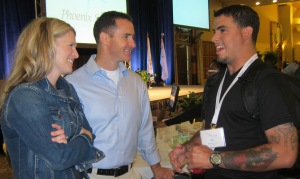
WBC volunteers assisting with registration

WBC volunteers assisting with registration

It is with deep appreciation that we are celebrating over 1,100 volunteers at the Phoenix Society as part of National Volunteer Week (April 21-27th).  Our volunteers are those everyday people who do extraordinary things for us, and include burn survivors, family members, firefighters, healthcare professionals and people in the local communities.

Since our organization’s founding, volunteers have been a source of action, contribution and moving the cause of burn awareness and improved burn care forward.  You, our volunteers, are critically important to burn survivors and their families, because you make the programs at the Phoenix Society for Burn Survivors possible.  For those interested in volunteering for the Phoenix Society, additional information may be found at http://www.phoenix-society.org/waystogive/volunteer

What do our volunteers do and how do they support the Phoenix Society?  For starters, our volunteers fulfill some of our most fundamental roles in the programs we offer to support burn survivors and their families on the road to recovery.

-          SOAR Volunteers:  Over 900 volunteers serve our peer support program, SOAR (Survivors Offering Assistance in Recovery).  These volunteers are comprised of coordinators, trainers, and peer supporters, and deliver the transforming power of peer support for hospitalized burn survivors and their families, which is essential to complete recovery.  More professionals than ever are recognizing the impact of “talking to someone who has been there”.  Peer support volunteers help others to thrive again!

-          Phoenix Society’s World Burn Congress:  Over 250 volunteers come together to support our annual conference..  This life-changing event is touched by volunteers who may be participating in a Phoenix Society program for the first time and others that have returned year after year to participate in our conference.  Volunteer roles at World Burn Congress:

  • Committees – a team of volunteers who work behind the scenes to coordinate all of the functions that produce Phoenix Society’s World Burn Congress.  This group coordinates everything from program sessions, media, hospitality / food, entertainment, transportation, silent auction, and the volunteer staff.
  • “AV Seals” – a team of volunteers who organize and run all of the AV, lighting, and equipment for the entire conference.
  • UBelong – a compassionate and caring group of burn care professionals, family members and burn survivors who volunteer to create a memorable experience for families, kids and young adults by delivering a session full of fun, social skill building and peer group interaction.
  • General Support – “Many hands make light work”; and we need the many hands to distribute t-shirts, transport attendees, move boxes, run registration and all the other behind the scenes work to make the event run smoothly.

-          Phoenix Society Advocates: Our advocate volunteers are those individuals committed to influencing positive changes in their lives, their communities and in their selected governments by sharing their story.  They become that “voice” for burn survivors and families, to support national prevention initiatives.

-          General Phoenix Society support:  We continue to receive behind the scenes support for our organization through such terrific volunteers that help with general tasks such as preparing mailings, stuffing envelopes, or offering their specialized services such as writing and consulting. All the volunteers out there sharing Phoenix Society information, programs and resources to those who need to find it most.

-          Phoenix Society Board of Directors:  Our board is comprised of skilled volunteers with a vested interest in the burn community.  The Directors volunteer their time and contribute their skills and knowledge to assist and oversee the operations of the Phoenix Society.  The board includes survivors, family members of those with burn injuries, and many industry and corporation experts.

SOAR peer supporter volunteers attend a training session

SOAR peer supporter volunteers attend a training session

35 years of providing services and  helping burn survivors everywhere get back to living -Phoenix Society continues to be a small staff with an inspiring base of volunteers across the country, whose enormous energy and commitment continue to support or efforts to ensure everyone affected by burn injury has the tools and resources they need to thrive again!

Phoenix Society would like to extend our heartfelt gratitude to all the individuals, organizations and supporters of the work we do.  Together, we can make these programs and resources available for anyone who is suffering from the affects of burn injury.

“No one is more cherished in this world than someone who lightens the burden of another.  Thank you.”  ~Author Unknown

Interested in volunteering? Go to our volunteer page on our website for more information!

Milestones and Life Events: The Cycle of Healing (Part II)

A trauma, such as a burn injury, can turn the lives of those it touches upside down and create much pain and struggle. Views about life, the world, and the future can crumble. However, the challenge of a burn injury can also bring about positive changes that the burn survivor and others affected by the burn injury may experience as a consequence of the trauma. Some refer to this as post-traumatic growth.

American Buddhist nun and author Pema Chödrön writes, “When there’s a big disappointment, we don’t know if that’s the end of the story. Everything that ends is also the beginning of something else…things falling apart is a kind of testing and also a kind of healing.” New strengths, purpose, or meaning can come about after a trauma—shaping who we are, as well as affecting our life journey.

In part I of this article, published previously in Burn Support News (Issue 3, 2012), James Bosch, a burn survivor, reflected on this topic. Here, Dustin Wise and Kimberly (Holt) Calman, who with Jim served as panelists at the 2012 World Burn Congress (WBC), share their thoughts. James January, another panelist, will share his experiences in the next issue.

Dustin picA Reflection From Dustin Wise

Recognizing Your Milestones

Growing up, I despised taking road trips with my family. I felt this way for two reasons: (1) because I was very impatient, and (2) I had no way of calculating the distance we had left to travel. It always seemed to me that the road ahead stretched on for days and that the more we drove the less we accomplished. I would sometimes try to figure out how many miles we had traveled or how many miles we had left. I was focused on the traveling itself, rather than the experience of the journey. Things would pass by my window unnoticed as I thought only about reaching our destination and getting out of the car. This misplaced focus often caused me to miss quality time with my family, as well as the many cities, mountains, and exciting places we passed. To me, these missed moments and scenes represent milestones.

I love the way the word “milestone” is defined as an action or event marking a significant change or state in Issue 1, 2013 development. Although some milestones can be overlooked—just as scenery is on a road trip—there are some milestones we never can forget. Some of these milestones are events or experiences that have brought about hurt, pain, discomfort, or frustration, while others are more publicly recognized and celebrated, such as a graduation, a new baby, a marriage, or overcoming adversity. Personally, I believe each of these milestones, whether good or bad, can be used strategically to benefit us in the end.

My Greatest Milestone

A personal milestone that I have endured and overcome is the transition from a typical boy to burn victim, and, ultimately, to burn survivor. At the age of 15, while I was at the stove cooking, my shirt caught on fire. As I glanced down at it, flames engulfed me. I remember the siren of the ambulance screaming in my ear as I was rushed to the hospital. It was a very painful event—one, which I am sure, any burn survivor can relate to. I suffered third-degree burns in hidden areas of my body and was hospitalized for months. The effects of this tragedy were more than physical. My body was burned but my self-image was also scarred. I could not stand to look at my body and the scars. Enduring this event might have been one of the hardest milestones I have crossed in my life, yet, as I reflect on this experience, I can also admit that it has been one of my greatest triumphs.

Road to Recovery

Because of my injury, I began to think of myself as a defeated individual. I allowed my fears, my past, the pain, the depression, and my insecurities to define me and dictate my potential and my capability. Immediately after my accident, I felt depressed and hopeless. I stopped running track. Because I would never take my shirt off in public, I stopped swimming or doing any activity that would reveal my scars. I had allowed my scars to define my identity and censor my happiness. This would not change until I reached another milestone—which occurred unexpectedly during my senior year in high school.

With a senior project due, I decided to volunteer at the Grossman Burn Center. There I helped organize a winter summit for young adult burn survivors. This summit greatly affected me and I was able to find help and redirect my future by choosing to take steps toward healing. I began to attend a support group and other support venues. The summer following the summit, I attended my very first summer camp, Champ Camp. That summer was yet another milestone for me.

I found a purpose—creating hope and passion within the burn community. Through these milestones and many other significant experiences, I have been fully restored as a burn survivor and am dedicated to the vision of showing other young adult survivors that recovery is possible.

My journey has helped me realize that not only are milestones important, they are critical. The milestone that was least expected has brought the most fulfillment and passion to my life. I have also realized that milestones are inevitable. Regardless of the milestones you have experienced, or will experience, it is important to remember that there is always another bend in the road. The next one you experience may be unexpected, but in it you may find help, hope, healing, joy, or peace. Never lose sight of the journey, enjoy the ride, and remember to recognize each milestone as it moves past your window.

During our presentation, Milestones and Life Events: The Cycle of Healing, at WBC in Milwaukee, we shared the following quote from psychotherapist and author Vicktor Frankl: “Forces beyond your control can take away everything you possess except for one thing, your freedom to choose how you will respond to the situation.” The following thoughts from Kimberly Calman speak to the heart of these words:

A Reflection From Kimberly Calman

I’ve heard all the catch phrases hundreds of times…“When life gives you lemons, make lemonade.” “It’s not the cards you are dealt, but how you play the hand.” “It’s not where you start, but where you finish.”Kimberly Holt & family - Photo-edited

I have to admit that I hated those sayings and others like them. You see, when you are a burn survivor, phrases like these just seem to sting a little more—especially when the “event” that radically changed your life was out of your control.

That was my story. I was 17—two weeks into my senior year of high school. More than 65% of my body was burned when fuel was poured on an open fire, resulting in an explosion. The can rotated and the bottom blew off launching a fireball my direction. My boyfriend was so severely burned from the incident that he died 10 days later. I spent months in the hospital, had numerous surgeries, experienced amputations and skin grafts, and physical therapy. I then waded through years of cruel insults, painful life transitions, and a general wondering of what life meant now that “it” had happened to me.
You could say I wasn’t really into lemonade.

That is, until I learned a few things. I learned that the life I was living was still mine. I realized that life happens, but you are in total control of how you respond. That milestone moment for me was even bigger than the event that triggered my scars. Without disowning “the fire” (as it came to be known in my family) and the reality of the pain I suffered as a result, I remember when I realized that “the fire” did not define me. I define me and I have the ability to create some wonderful definitions.

In the journey of recovering, it is easy to fall into a pattern of being a victim and letting that mentality define who you are. I certainly fell for that. Early on I wasted a lot of time crying, hiding, and returning ignorant comments with anger and bitterness. But not one of those choices helped me. In fact, they made me feel much worse about my condition. My “condition” became the defining factor in my relationships. I was destroying the very things that give life to all of us—great relationships.

I never realized this more than when I started my own family. The tension in my home—the tension in me—in my relationships had so much to do with the way I understood myself. Through pregnancy, giving birth to two children, and becoming a parent, I began to see that how I thought and felt about myself created the relationships I cared most deeply about.

And I didn’t necessarily like what I was creating.

I began to understand that my attitude is something within my control. Attitude is a personal choice—whether positive or negative—and is independent of what “happens” to us. While each life event I encountered as a burn survivor carried with it the same feelings of fear and anxiety—about how others would see my scars, gaining acceptance, dealing with physical limitations, not wanting to be a public spectacle—I saw that my attitude had everything to do with the response I got from others. The moment I learned that lesson was a milestone moment—my journey as a burn survivor changed forever.

It’s pretty simple really—my scars are never going away, so I might as well embrace them. They are a part of me now. They are my “new normal.” And…they’re okay. The reason they are okay is because I define them—they don’t define me. Living in this new reality allowed me to start looking people in the eye again. I began to speak publicly in groups and at events and became a peer supporter to help others. I started to once again live in a way that relationships could be a joyful part of my life. My relationships were defined by love, acceptance, grace, and forgiveness—rather than scar tissue, shame, fear, and self-hatred.

I now enjoy the love of a wonderful man in my life. My relationship with my kids has never been better (well, most of the time—they are teenagers). I reconnected with my sisters—who are now my best friends. I deeply cherish my relationships in the burn community that are terrific wells of support.

I enjoy these now because I learned—the hard way—that my attitude really does matter. Without denying the reality of my story, I have found a new way of being that allows me to be the definer of my life—in complete control over that which I can.

Whether you are feeling sad, alone, angry, bitter, fearful, or anxious, I encourage you not to be afraid to ask for help. No matter when you were burned, allow yourself to have “bad days” and ask for help (even if you feel you should be “over it” by now). Remember there are lots of resources—friends or family, the Phoenix Society chat rooms, or local support groups.

Through my journey, I discovered my own catch phrase: “Life is 10% what happens to you and 90% what you do with it!” When you see yourself as the beautiful person that you are, life really does begin to take off again.

And the lemonade is pretty good, too.

Written By: Karen Badger, PhD, MSW and Liz Dideon Hess LCSW

Dustin K. Wise, a senior at Oral Roberts University, is a burn survivor, author, and motivational speaker. Kimberly Calman, BA, is a burn survivor, mother, speaker, and Phoenix Society SOAR peer supporter. She also serves on the American Burn Association Membership Advisory Committee. Karen Badger, PhD, MSW, is an associate dean and associate professor at the College of Social Work, University of Kentucky.

Go here and download the latest Spring 2013 Issue of Burn Support News!

Cyber Bullying: What is it? And What Can You Do?

Bullying is a term we are hearing more often in the media and schools.  As we are becoming more informed about bullying, the more we need to know about the types of bullying that you or your children may be exposed to.bullyface

Cyber bullying is a more recent form of bullying that is on the rise.  As the channels of communication such as social media, web, and texting have multiplied, so have the number of ways bully’s can reach their victims. The Phoenix Society for Burn Survivors has developed a resource to help explain bullying in more detail and give advice on what you can do to help prevent it, recognize it or address it if you see it.

Definition of Cyber bullying

Cyber bullying is bullying through email, instant messaging (IMing), chat room exchanges, Web site posts, or digital messages or images sent to a cellular phone (Kowalski et al. 2008). Cyber bullying, like traditional bullying, involves an imbalance of power, aggression, and a negative action that is often repeated.

Characteristics of Cyber Bullying:

  • Anonymity: As bad as the person who is bullying face-to-face may be, he or she can be readily identified and potentially avoided. On the other hand, the person who cyber bullies is often anonymous. The target is left wondering who the cyber “bully” is, which can cause a great deal of stress.
  • Accessibility: Most people who use traditional ways of bullying terrorize their victim at school, at work, on the school bus/ or walking to or from school, etc. Although bullying can happen elsewhere in the community, there is usually a standard period of time during which these children or adults have access to their targets. People who cyber bully can wreak havoc any time of the day or night.
  • Punitive Fears: Targets of cyber bullying often do not report it because of: (1) fear of retribution from their tormentors, and (2) fear that their computer or phone privileges will be taken away. In the case of children/teens who cyber bully, adults’ responses to this behavior are often to remove the technology from a target – which in their eyes can be seen as punishment.
  • Bystanders: Most traditional bullying episodes occur in the presence of other people who assume the role of bystanders or witnesses. Being a bystander in the cyber world is different in that they may receive and forward emails, view web pages, forward images sent to cell phones, etc. The number of bystanders in the cyber world can reach into the millions.
  • Disinhibition: The anonymity afforded by the Internet can lead people to engage in behaviors that they might not do face-to-face. Ironically, it is their very anonymity that allows some individuals to bully at all.

Adapted from: Katy Pearson, content 2012

What You Can Do: cyberbullycircle

  • Protect Yourself Keep your personal information private. Do not share passwords. Make your passwords easy to remember but difficult to guess (and do not use personal information, such as a phone number, in your password).
  • “Search” Yourself: Find out what information about you is public. Do an internet search of your name in various forms.
  • Stop, block and tell : If you are targeted by a cyberbully:
    • STOP!
      Don’t do anything. Take 5! to calm down.
    • Block!
      Block the cyberbully or limit all communications to those on your buddy list.
    • and Tell!
      Tell a trusted adult, you don’t have to face this alone.
      Report cyberbullying to wiredsafety.org
  • Practice the Internet “Golden Rule”-
    • Start by making sure you are sending things to the right place, that it arrives and that the right person gets it.
    • Is it worth sending? Don’t waste peoples’ time or bandwidth with junk, chain e-mails and false rumors.
    • Proofread and spell-check your e-mails and make sure they know who you are.
    • Don’t attack others online, say anything that could be considered insulting or that is controversial.
    • Don’t forward other people’s e-mails without their permission or share their
      personal information.
    • Are you angry when you are writing this message?
    • Don’t reply to spam, even to ask to be removed from their mailing list.
    • How private is the message you are sending? Are you willing to have others read this message or forward it to others without your permission?
  • You are accountable for your actions online/in the “virtual” world (just as in the “real” world). Do not allow bullying in any form, including cyber bulling.
  • Step away from the computer! Before responding to something you encounter online, take a few minutes to calm yourself. Ask for support from a trusted adult.
  • Be a part of the solution, not the problem. Never forward or share emails, photos, links, etc. which contain information that might cast a negative image of someone/something else. Don’t continue the negative dynamics public (by continuing an argument through email or texts, or retaliating). Don’t make the negative issues public (such as posting a negative message on a public website). Instead, report these negative messages to wiredsafety.org Help by using the technology instead of being controlled by it.
  • If you witness cyber bullying, staying silent makes the problem worse! Silence, when others are being hurt, is not acceptable. Everyone can be safer online and offline when bullying is not tolerated.

Adapted from: Wired Kids, Inc. http://www.stopbullying.org/index.html

Additional Resources:
Cyber Bullying in the Digital Age by Robin K. Kowalski, Susan Limber and Patricia Agatston

Cyber-Safe Kids, Cyber-Savvy Teens: Helping Young People Use the Internet Safely and Responsibly by Nancy Willard

GaurdingKids.com, A Practical Guide to Keeping Kids Out of High-Tech Trouble, by Russell A. Sabella, Ph.D.

Center for Safe and Responsible Internet Use (includes information about bullying) http://www.embracecivility.org/

Laws (state and federal) which address bullying, harassment, and hazing:
http://www.violencepreventionworks.org/public/bullying_laws.page

Wird Kids, Inc.: Stop Cyberbullying: http://www.stopcyberbullying.org/

Wired Safety, Internet Safety and Help Group: http://wiredsafety.org

For more information, including additional documents and strategies for children, teens, and adults facing these situations, please visit the File Center in the Online Learning Management system.